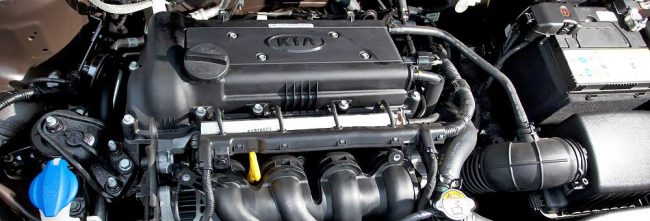
Debuted by G4FC in 2007, still in production. One of the best modern class B engines. The main parts are made of aluminum, lightweight construction. Develops 122-130 hp. With.
Less than ten years have passed since the day when the first Solaris and Rio sedans rolled off the assembly lines of the factories of the united Hyundai / KIA corporation, and Russia is already “to the eyeballs” filled with these advanced cars in every respect. Korean engineers created these two clones based on the Accent (Verna) platform, especially for the Russian market. And they didn’t fail.
A few years before the release of the G4FC, Hyundai merged with Kia, in fact, completely replacing the engine range of this manufacturer. And the new 1.6-liter engine also began to be installed on the Rio, Cerato, Sid, as well as Hyundai Solaris, Ai40, Santa Fe, Accent models.
The technical capabilities of this unit are quite versatile – it is suitable for both the city and the highway. Therefore, it is equally well combined with sedans and crossovers. Depending on the particular vehicle, the G4FC may have different power ratings and KM. So, on Rio 1, released before 2011, it develops only 112 hp. s., and on Kia Sid and Rio 3 – 126 liters. With.
Engine maintenance must be carried out with a mandatory visit to a service station. This is done every 15 thousand kilometers. This order is due to the operation of the oil system, which needs periodic inspection, oil and filter replacement.
In addition to the standard program, there are scheduled maintenance, designed for heavily loaded engines. So, if the internal combustion engine is operated at a temperature below 15 degrees. In this case, the maintenance schedule should be reduced to 7 thousand km.
It is interesting that the same motor is operated on one car under a heavier load than on another. For example, Solaris and Kia Sid. Therefore, the same air filter on the first car must be changed every 15 thousand km, and on Sid – every 45 thousand km. However, the cabin filter is updated at the same time – every 15 thousand km.
More details about the terms of technical inspection in the table.
A motor with pistons that are 100% guaranteed to bend valves if the timing chain breaks. Therefore, the engine is not considered particularly reliable, especially since there are other characteristic problems.
Consider the most popular of them.
It is a pleasure to carry out refinement on this ICE. For example, if you start with calibration, which is the most innocuous and simple amplification option. This method will give an increase in power by 10-15 liters. With. No major financial outlays are foreseen during the calibration. However, if you add a 4-2-1 universal exhaust system, as well as new 51mm pipes, the engine becomes even stronger.
The other way will already reduce the resource of the motor, but it will give a real sports boost. It will be necessary to port the cylinder head by installing valves with a larger size. You will also have to order sports camshafts with a wide phase, and a receiver for them.
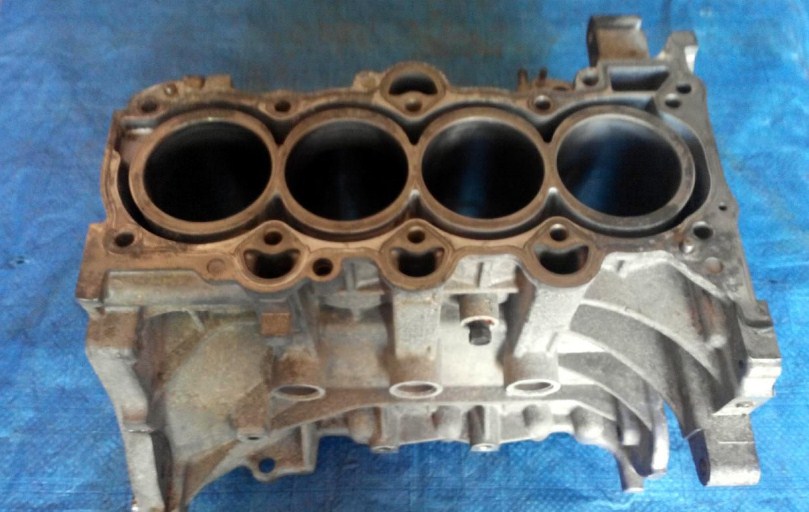
Finally, tuning with the installation of a turbine is a complex and professional, but at the same time a classic version of refinement. In a specific case, you can copy everything from a modified version of G4FJ or just do a swap.
Built on the basis of the G4FA, the G4FC power plant turned out to be quite successful, although not without design flaws. But the same engines have already begun to be produced under the Gamma 2 series – they develop 137 hp. with., have an improved database.
If we talk about engines, the 6G72 has become a landmark for Hyundai in some way. It was developed back in 1986 and demonstrated unprecedented power for those times. Its other advantages, which included ease of maintenance, reliability and low fuel consumption, allowed the motor to stay on the market for more than 20 years – until 2008. And to this day, he still has fans among motorists.
G4GC, released in 2002, became no less iconic. It was powerful and large. However, Hyundai has made a particularly large contribution to the production of engines for large vehicles – buses and trucks. The D6AC motor is installed to this day on almost all similar cars produced by major brands, including in Russia. The main advantage that has become the reason for such popularity is the long service life and exceptional reliability of the engine, although modest fuel consumption, which is rarely seen in engines for such cars, also played a role.
Also, during the entire time that the D6AC has been in production, it has received many modifications, which mainly differ only in power.
At the Moscow Motor Show in 2010, Hyundai showed a pre-production version of the sedan for the Russian market, and in January 2011, serial production of the model under the name Hyundai Solaris began at a plant in St. Petersburg. Later, a five-door hatchback got on the conveyor.
The car was similar to the fourth generation Hyundai Accent for the American and Korean markets and the Hyundai Verna for the Chinese market. The name “Solaris” was used only in Russia, and cars from the St. Petersburg plant were also exported to the countries of the former USSR, Egypt and Lebanon under the name “Accent”.
In August 2011, Kia Rio cars began to be produced in Russia, created on a common platform with Solaris, but differing in design.
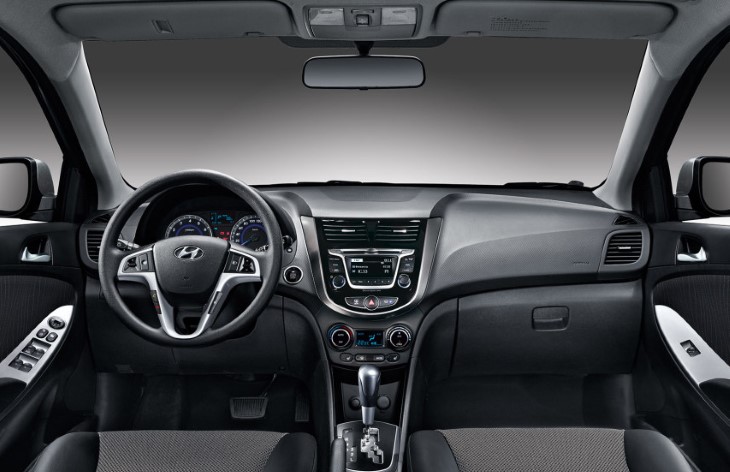
First generation Hyundai Solaris interior
Sedans and hatchbacks were equipped with petrol engines of 1.4 and 1.6 liters (107 and 123 respectively). Both of these power units of the Gamma series had the same cylinder blocks and differed in piston stroke. Gearboxes – five-speed manual or four-speed automatic.
Prices for the Hyundai Solaris at the time of debut started at 399,000 rubles, but the basic equipment was modest – one airbag and front power windows. Later, the equipment of the standard version was expanded, and prices were repeatedly raised: by 2017, the cost of the base sedan had risen to 590,000 rubles.
Hyundai Solaris sedan of the first generation after restyling, 2014–2016
In 2014, the model was restyled. Hyundai Solaris received a new front end design, different seat upholstery, steering wheel adjustment for reach and heated windshield in expensive versions. Cars with 1.6-liter engines after restyling were equipped with new six-speed gearboxes.
Solaris has become one of the most popular cars on the Russian market. In 2012-2015, more than 100 thousand copies of the model were sold annually, and in 2016, with a result of 90 thousand cars, Solaris became the first in the rating of models. The closest competitors of the car were Volkswagen Polo Sedan, Skoda Rapid, Kia Rio.
Production of first generation hatchbacks ended in spring 2016, sedans continued to be produced until December 2016.
The current generation of the Hyundai Solaris model has been produced since 2017. On the catalog page you will find detailed information about the prices and equipment of the car, as well as photos, videos, specifications, reviews and much more.
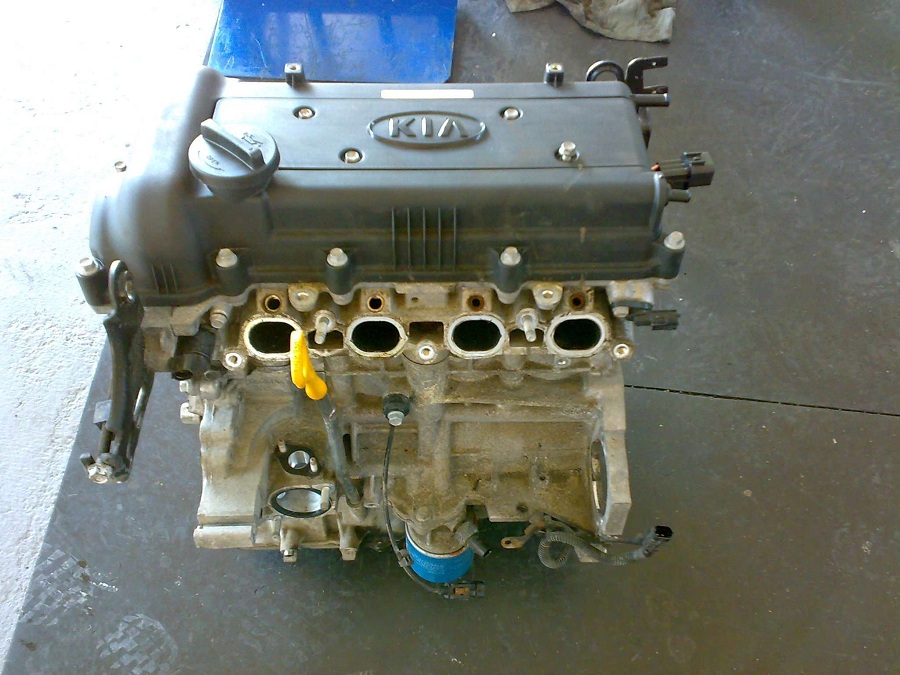
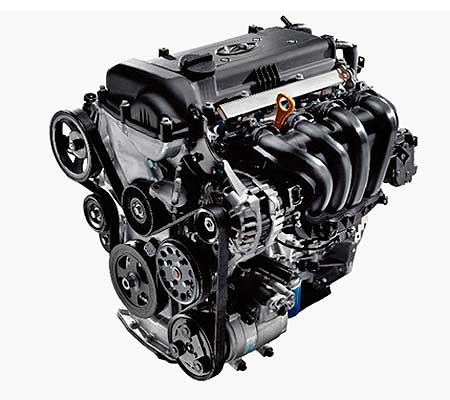
This is a gasoline in-line four with two DOHC camshafts. They control the operation of 16 valves in the cylinder head. The motor is economical, the designers managed to correctly set up the nozzles, which, without losing their performance, take not so much fuel. The injection is regulated by the ECU, so everything happens clearly, and the amount of harmful exhaust gases is noticeably reduced.
The engine belongs to the Gamma series, like the G4FA. But unlike him, G4FC has an increased piston stroke. The rest of the motors are schematically similar, both are equipped with a timing chain, and not a frail belt. A metal chain does not need to be looked after so diligently, the manufacturer generally indicates that it has no operating restrictions. Of course, this is not so, it just goes much longer.
G4FC was originally conceived by the designers as a modified version of the 1.4-liter FA. In fact, it should not have the shortcomings that its predecessor had. However, the designers failed to eliminate the characteristic sores – noise, dips, vibrations. On the other hand, this is a more voluminous motor, so its power is enough to overcome the loads, and the consumption is almost the same as 1.4. In addition, the G4FC has CIFG (Variable Valve Timing System) on both camshafts, which also makes the engine more efficient.
Thus, the device of this internal combustion engine can be called classical. G BC – aluminum, mounted on a lightweight BC. Cylinder glasses are non-removable, not subject to overhaul. The intake manifold is made of PVM, a very durable material that can achieve several goals, including reducing weight and improving compactness.
Thus, the design calculation in the manufacture of this motor was as follows:
Another feature of the motor is that the valve bends when the circuit breaks. However, a metal knot is much more reliable than a belt, so a break occurs quite rarely.
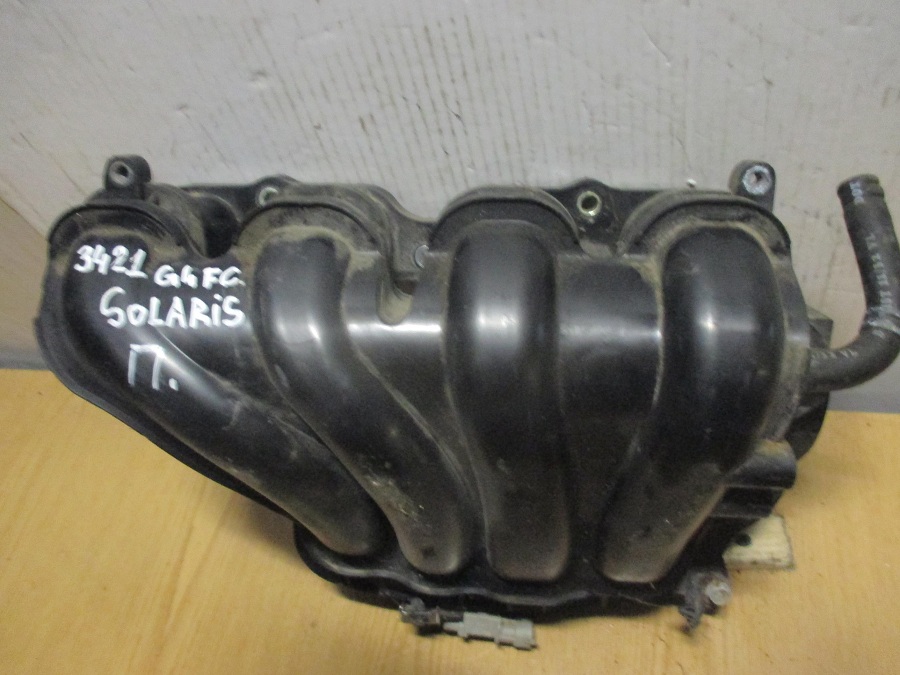
Plastic intake manifold
The Korean manufacturer, as always, unreasonably praises the new model – supposedly, the engine can function smoothly for 180-200 thousand km. Of course, this is not so, especially in our country, where bad roads and low-grade gasoline will do their dirty work. The G4FC resource is determined not by the manufacturer’s statements, but by the driving style, the frequency of maintenance, the consumables used and other conditions. For example, there is a real example of Solaris with such an internal combustion engine that ran more than 700 thousand km without capital.
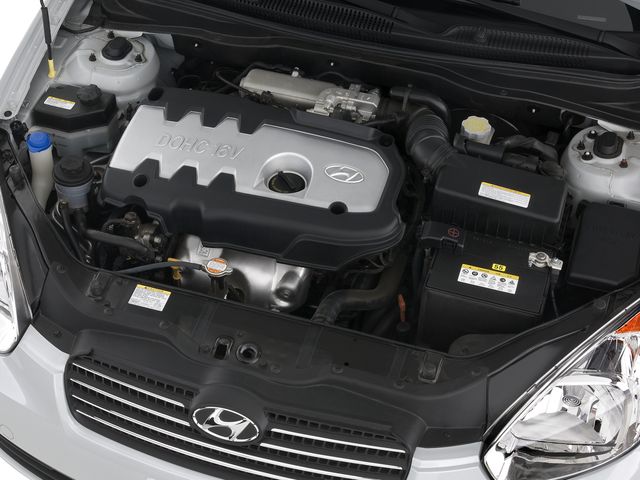
The predecessor of this engine is the 1.4-litre G4FA. More modified versions for Western markets are G4FD with GDI and G4FJ with T-GDI. Direct injection of one modification and turbocharging of another made these engines very popular, especially in the USA.
This engine belongs to the Gamma series – a new line that completely replaced the Alpha 2. The G4FA engine has a volume of 1.4 liters. It is assembled on one business center, uses a chain instead of a timing belt.
The G4FA engine has been produced since 2007. A model from the new Gamma family, it is installed on Korean class B cars, including the Solaris and Elantra. The design scheme of the motor includes a lightweight BC with thin cast iron sleeves.
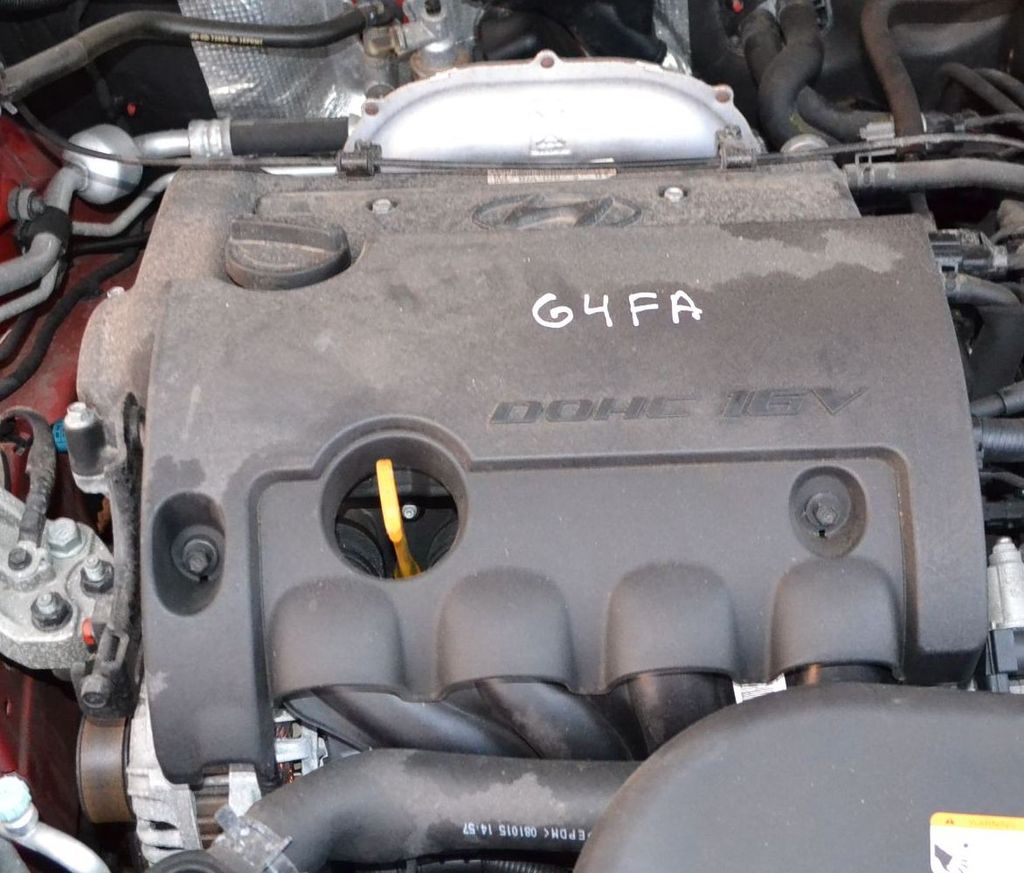
The engine life declared by the manufacturer is 180 thousand km. This is even lower than that of the VAZ models. But, of course, with a calm driving style and periodic replacements of worn out consumables, 250 thousand km for this motor is not the limit. However, a large mass of drivers do practically nothing, but only take the car to MOT according to the regulations. Therefore, already after the 100,000th run, difficulties begin.
G4FA Service Policy
The timing chain works with tensioners, and as the manufacturer assures, it does not require maintenance during the entire operational period. Thermal gaps need to be manually adjusted, since the G4FA does not have automatic hydraulic compensators. This is done every 90 thousand km – the valve clearances are adjusted by replacing the pushers. If you ignore this process, it will cause problems.
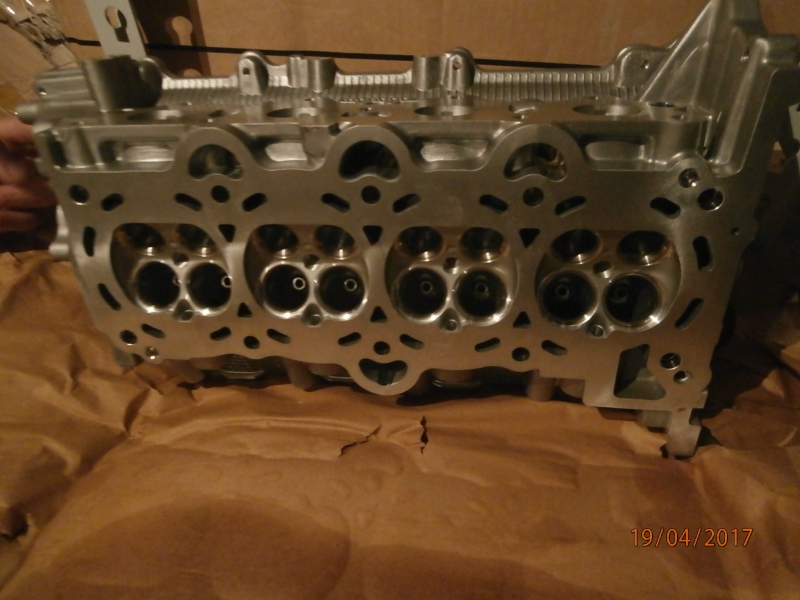
Korean engine cylinder head
Consider the known problems with the G4FA engine:
Noise in G4FA is caused by two reasons: timing chain or valve knocking. In 90 percent of cases, the chain knocks. This usually happens on a cold engine, then as it warms up, the knock disappears. If a hot engine is noisy, these are already valves that require immediate adjustment. As for the chirring sounds and clicks, this is normal, nothing needs to be done – this is how the nozzles work.
An oil leak on a G4FA is always related to cylinder head gasket wear. You just need to replace it, and continue to operate the car. But swimming speed is caused by clogging of the throttle assembly. It is necessary to clean the damper, and if it does not help, reflash the control unit.
A dirty throttle assembly can also cause engine vibration at idle. Strong motor shocks also appear from faulty candles or clogged dampers. Replacing the sparking elements and cleaning the damper will help solve the problem. Very strong vibrations occur due to the fault of the relaxed supports of the power plant.
It is noteworthy that the developers themselves warn engine owners that vibrations are possible at medium speeds due to the features of the G4FA model. Due to the fault of the universal, characteristic design of the power plant supports, all vibrations are transmitted to the steering wheel and other areas of the machine. If at this moment you accelerate or abruptly release the accelerator pedal, the engine will come out of the mesomeric state, and the vibrations will disappear.
And finally, a whistle. It comes from a sagging, not well-tightened alternator belt. To get rid of unpleasant noise, it is necessary to change the tensioner roller.
The G4FA engine is called disposable by repairmen. It means that it is difficult to restore, some elements are almost impossible to repair. For example, there is no standard for many internal combustion engines for cylinder bores for the repair size. You have to change the whole BC. But recently, some Russian craftsmen have learned to sleeve the BC, thereby increasing the life of the motor.
The first modification is the 1.6-liter G4FC. The main differences between them are the volume and the presence of automatic valve controls on the G4FC. In addition, the FA develops 109 hp. s., and FC – 122 liters. With. They also have different torque: 135 versus 155, respectively.
Recently, other versions have been released, already more modified – G4FJ and G4FD. The first unit with a T-GDI turbine, the second with a direct injection system. The Gamma family also includes G4FG.
Chipovka is one of the easy, fast and cheap ways to increase traction. After such tuning, the power will increase to 110-115 hp. With. However, there will be no serious changes if you do not install a 4-2-1 spider and increase the diameter of the exhaust pipes. You will also need to refine the cylinder head – increase the valves – and flashing. In this case, an increase in power up to 125 hp can be achieved. With. And if you add all this sports camshafts, then the engine will become even stronger.
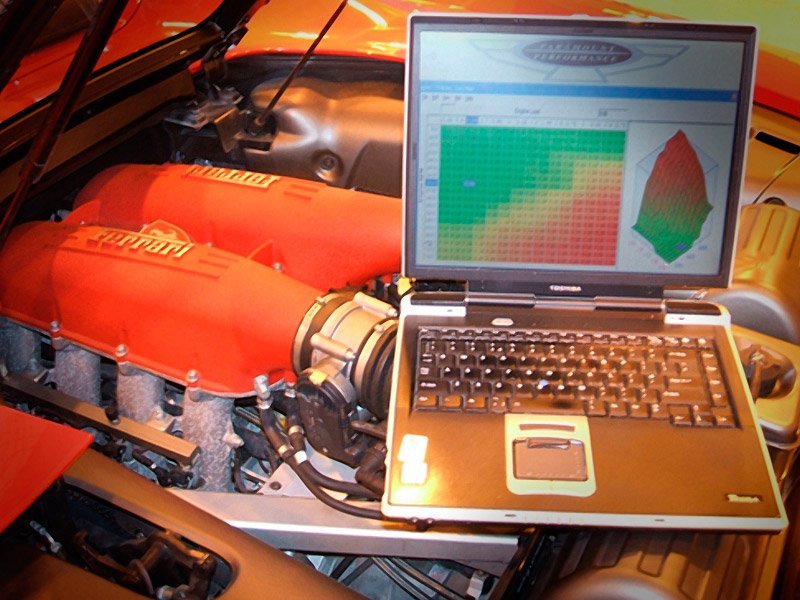
What can an internal combustion engine chip give
Installing a compressor is the second tuning option. This is an extreme measure of modernization, since the engine resource in this case is noticeably reduced.
In addition to the compressor itself, a new exhaust with a pipe diameter of 51 mm is installed. Engine power will increase to 140 liters. With. If you additionally machine the intake / exhaust channels, the engine will increase to 160 hp. With.
Installing a turbine is the third option for refining the G4FA engine. However, in this case, a more professional approach is needed. First of all, you need to weld a new reinforced manifold for the Garrett 15 or 17 turbine. Then organize the oil supply to the turbine, install the intercooler, 440 cc nozzles and build a 63 mm exhaust. It does not do without shafts, which should be made with a phase of approximately 270 and a good lift. A well-tuned turbine will give an increase in power up to 180 hp. With. The method is expensive – it costs almost half the price of the car.
Advantages and disadvantages
The base engine of the Kappa series for the new generation of Korean cars of the KIA and Hyundai brands was designed and delivered to the assembly line in 2015. We are talking about the latest development, a G4LE encoded unit designed to comply with European environmental standards Euro 5. The motor is specially designed for use in power plants of medium and compact models of KIA (Rio, Ceed JD) and Hyndai Solaris cars.
Injection engine with multiport fuel injection has a working volume of 1368 cm3, power – 100 hp. Unlike the G4FC, it has a hydraulic compensator. In addition, the phase regulators are installed on two shafts (Dual CVVT), the timing drive is advanced – with a chain instead of a belt. The use of aluminum in the manufacture of the block and cylinder head significantly reduced (up to 120 kg.) The total weight of the unit.
In terms of fuel consumption, the engine brought the most modern Korean car as close as possible to the best world standards:
The G4LC has a number of interesting design features:
To top it off, Kappa engines are much cleaner than the vast majority of opponents from FIAT, Opel, Nissan, and other automakers, with CO2 emissions of just 119 grams per kilometer. It weighs 82.5 kg. This is one of the best indicators in the world among mid-displacement engines. The main parameters of the unit (toxicity level, speed, fuel mixture formation process, etc.) are controlled by a computer with an ECU consisting of two 16-bit chips.
Of course, a short period of operation does not give rise to the identification of typical malfunctions. But one “minus” still slips in various forums from owners of cars with the G4LC engine: it is noisy compared to the older lines of Hyundai units. Moreover, this applies both to the operation of the timing and injectors, and to the general level of noise from the operation of the power plant while the vehicle is moving.
The most popular engine for Hyundai Solaris
Gamma engines almost divide this line in half, but still, the G4FC engine “withstood” a little more configurations. They are very similar to each other. The FC motor was “increased” in displacement from 1396 to 1591 cubic centimeters, increasing the piston free play. The year of birth of the unit is 2007. The assembly site of the Hyundai car plant in the capital of China, Beijing.
123 hp inline four-cylinder injection engine. designed for environmental standards Euro 4 and 5. Fuel consumption (for the variant with a manual transmission):
The motor has a number of design features typical for modern Korean engines:
Unlike many other modern designs, in the G4FC, the designers installed the valve timing regulator on only one shaft, the intake.
Of particular interest is the multipoint port injection system installed in the engine. It has five main structural elements:
The principle of operation of the system is quite simple. Air, passing through the atmospheric filter, mass flow sensor and throttle valve, enters the intake manifold and engine cylinder channels. Fuel enters the injectors through the rail. The proximity of the intake manifold and injectors minimizes the loss of gasoline. The control is carried out using the ECU. The computer calculates the mass fractions and quality of the fuel mixture based on load, temperature, engine operating modes and vehicle speed. The result is electromagnetic impulses for opening and closing the nozzles, supplied at a certain moment from the control unit.
MPI injection can operate in three modes:
The advantages of this fuel injection scheme include efficiency and full compliance with environmental standards. But those who prefer to buy a car with an MPI engine should forget about dashing high-speed driving. Such motors are much more modest in terms of power than those in which the operation of the fuel system is organized according to the principle of direct supply.
Another “minus” is the complexity and high cost of equipment. However, in terms of the ratio of all parameters (ease of use, comfort, cost, power level, maintainability), this system is optimal for domestic motorists.
For the G4FC, Hyundai has set a fairly low mileage limit of 180,000 km (10 years of operational use). In real conditions, this figure is much higher. Various sources contain information that Hyundai Solaris taxis are gaining up to 700 thousand km. run. The relative disadvantage of this engine is the lack of hydraulic lifters as part of the timing mechanism, and the need to adjust valve clearances.
In general, the G4FC proved to be an excellent motor: small in weight, inexpensive in maintenance and unpretentious. However, it should be borne in mind that from the point of view of a major overhaul, this is a one-time copy. All that can be done on it is the plasma spraying of cylinders and boring to the nominal size. However, whether it is necessary to think about what to do with a motor that can easily “drive” half a million kilometers is a rhetorical question.
Engines for Hyundai Solaris
Unlike the Hyundai Solaris, this car has a completely different story. She showed herself. As one of the most reliable in terms of the operation of power plants. Eight years of presence in the global automotive markets – and only three units under the hood.
With the presence in other models, everything is just as simple. The G4LC motor is brand new. It is designed specifically for use in the Hyundai Solaris car and the new compact KIA models. Two engines in the Gamma line, G4FA and G4FC, were tried as the main engines for the i20 and i30 intermediate hatchbacks. In addition, they were installed on the top models of Hyundai – Avante and Elantra.
History of creation and production
It is very symbolic that the official announcement of the start of production of the new model and the presentation of its prototype took place at the Moscow International Motor Show 2010. On September 21 of the same year, it became known that the new model would be called Solaris. Another six months – and mass production and sale of the car began. Hyndai bosses acted very far-sightedly, removing the “baby” Getz and the i20 hatchback from the Russian market in order to promote the new model.
Cars were assembled in Russia at the Hyundai Motor CIS automobile plant in St. Petersburg. Under the Solaris brand, the car was sold only in our country (sedan, and a little later – a five-door hatchback). In Korea, the USA and Canada, it was positioned under the main name Accent, and in China it could be bought as Hyundai Verna. His clone (KIA Rio) first rolled off the assembly line in August 2011. The platform of the machines was common, but the design was different.
Gamma motors (G4FA and G4FC) had almost the same design. Power (107 and 123 hp) was not the same due to different piston strokes. Two types of power plants – two types of transmission. For Hyundai Solaris, engineers have proposed a 5-speed “mechanics” and a 4-speed automatic transmission. It should be noted that in the basic configuration for the Russian Federation, the set of Solaris features turned out to be very modest: one airbag and electric lifts in front. With the improvement of the basic content, the price increased (from 400 to 590 thousand rubles).
The first appearance change took place in 2014. The Russian Solaris received a new grille, an even sharper geometry of the main lighting headlights, and a mechanism for adjusting the steering column reach. In the top versions, the upholstery style has changed, windshield heating and a six-speed transmission have become available.
Suspension modernization was carried out on this car three times due to the lack of rigidity of shock absorbers and springs, the appearance of rear axle buildup when driving on a road with a lot of bumps.
Depending on the set of functions, type of power plant and transmission, buyers were offered five types of vehicle configurations:
In the maximum configuration, there were a large number of additional “chips”: the installation of a supervision-type dashboard, audio control on the steering wheel, 16-inch alloy wheels, keyless entry with an engine start button, daytime running lights, an electronic stability control system, climate control, lined bottle pockets, Bluetooth support in the cabin, six airbags.
Despite the popularity of the machine, a wide discussion on specialized forums in RuNet, as well as a large number of independent tests, brought out several shortcomings:
Nevertheless, in terms of thrust-to-weight ratio and the quality of manufacturing of structural elements and finishes, the car surpasses many analogues of other manufacturers, the appearance of which on the Russian market was the same target. The popularity of the car in Russia was very high. The annual sales level was about 100 thousand pieces. The last 1st generation Solaris car was assembled in our country in December 2016.
In 2014, the development and testing of the next generation Solaris car systems began under the leadership of Hyundai Motor Design Chief P. Schreiter. The process lasted for almost three years. In particular, laboratory tests were carried out at NAMI, the determination of the running resource was carried out on Ladoga, as well as on the roads of the European part of the Russian Federation. The car has traveled over a million miles on them. In February 2017, the first car of the second generation was released.
In terms of the power plant, the changes are minimal: the latest Kappa G4LC unit and a 6-speed manual gearbox have been added to the Gamma line of engines. With it, the car accelerates from standstill to 100 km / h a little slower than 12 seconds. Maximum speed – 183-185 km / h. In terms of “agility” on Russian roads, the new Solaris is comparable to Renault Logan and Lada Granta. The only inconvenience for advanced drivers is the lack of power under the hood. In the top-end equipment, the emphasis is still on the 1.6-liter G4FC engine with a capacity of 123 hp. It is faster than the “beginner” by two seconds from a standstill, and faster “in the absolute” – 193 km / h.
Delivery of the car is carried out in four types of configurations:
In the ultima version, the car contains all the “chips” that were available to moneybags when buying a first generation car. To them, the designers added fifteen-inch alloy wheels, a rear fixation video camera and a washer spray heating system. The main “minus” of the car never became history: the sound insulation is still “lame” (especially for those who sit in the back). The hissing of the engine when driving has not become less. It is not very convenient to be in the rear seats for passengers with growth above average: the ceiling of the car is, perhaps, understated for them.
At the same time, the engineers managed to cope with the “swing” effect. On bad roads, the car behaves much better than its predecessor. Reviews of the “members of the forum” testify to a number of positive qualities of the car:
In general, the subcompact model designed by the Koreans purposefully for the Russian car market showed excellent balance. There are no obvious flaws in it that would lead to a radical decrease in sales. On the contrary, the popularity of the second generation has grown significantly, in comparison with the cars that were assembled in Russia until 2016. Question price for those. who wants to see everything “in one bottle” – 860 thousand rubles. This is how much Hyundai Solaris costs in the Elegance configuration.
Дополнительно про Solaris
 Hyundai Solaris: сравниваем внутреннее пространство — выясним, что больше
 При поездке в горы на коробке автомат нужно ли включать спорт режим на хендай солярис
 Загадка левого постукивания раскрыта: узнайте правду
 10 лучших тормозных колодок для Хендай Солярис | Авто и мото
 Заявленный пробег хендай солярис двигатель 1.6
 Недостатки Хендай Солярис: обзор всех проблем авто
 Hyundai solaris прокат в калининграде
 Адаптация АКПП: что такое, сброс и калибровка коробки автомат – Новый Solaris
 Что такое водородная очистка двигателя как работает и стоит ли делать
 Освоение зарядки аккумулятора: простые способы достижения максимальной мощности и долговечности